Tag: world cup

  • Canada- 2026 World Cup Factfile

    Canada- 2026 World Cup Factfile

    Canada will participate in their second consecutive FIFA World Cup, and for the first time, as co-hosts, with this responsibility being shared alongside the United States and Mexico. 

    Given their recent form, especially when considering their performance in the most recent Copa America, expectations have risen sharply around Canada, with few national sides climbing as rapidly in the FIFA World Rankings in recent years, reinforcing their emergence as a new threat on the international stage.

    World Cup History

    The 2026 World Cup will be the third men’s World Cup in the Canucks history. Their first appearance came in the 1986 tournament, which was hosted in Mexico, where they qualified after going unbeaten against both Costa Rica and Honduras in the final round of qualifiers. 

    Despite this, they would finish their first campaign in FIFA’s centrepiece bottom of their group that contained European champions France, without scoring a goal.

    Canada was close to qualifying for the 1994 World Cup, getting to the inter-confederation playoffs, but lost out to Australia in the semi-finals on penalties.

    After 1998, the next time they would reach the final round of CONCACAF qualifiers was 2022, where despite starting their campaign in the second round, they defied all odds qualifying for the Qatar World Cup under the management of John Herdman, with current Southampton player Cyle Larin being the top goalscorer in the continent.

    Once again, unfortunately for Canada, they finished bottom of their group, which contained two teams that reached the semi-finals, missing a penalty in their opening match against Belgium in which they were the better side. Though, the Canucks scored their first two goals at the FIFA World Cup, and would hope to push on from this campaign.

    Recent Form

    Since the 2022 World Cup, Canada has been on an incredible run, especially since the appointment of Jesse Marsch.

    This has led to the second-largest country by total area, which went from 120th to 30th in the FIFA World rankings in just eight years.

    After qualifying for the expanded version of the Copa América, allowing for direct qualification for North American nations, Canada became the only North American side to get through the group stage alongside Panama, after a win against Peru and a goalless draw against Chile.

    From here, Marsch’s side beat Venezuela in the quarter finals before going on to lose 2-0 in the semi final to World champions and Copa América holders, with the Canucks creating major chances which they failed to convert.

    Since the Copa América in 2024, Canada has played 21 matches, only losing twice, with this run including wins against the United States twice, Ukraine, Wales, and a goalless draw away to France.

    Manager – Jesse Marsch

    At the centre of Canada’s revolution is Jesse Marsch, renowned for his high-energy, pressing and attractive philosophy, who was appointed after talks about the vacant United States job broke down in May of 2024.

    Regarding the latter, what is interesting about the appointment of the American is that it followed a highly publicised breakdown of his stance on becoming manager of his home country, where he quotes that there were strong indications he was going to get the role before the organisation, before they reappointed the manager they had sacked the week prior, with Marsch saying that he “wasn’t treated very well in the managerial process”, stating that due to his devastation on the issue, he would have no interest in the United States role.

    This name will be familiar to many, especially given his recent spell in the Premier League with Leeds United, after he was brought in by the club’s Director of Football, Victor Orta, in a bid to maintain their Premier League status, which he achieved in his first season in dramatic fashion on the final matchweek of the season.

    Marsch, who was born in Wisconsin, started his career in football as a player being drafted from his University side, Princeton Tigers, to D.C. United before being signed by Chicago Fire in their inaugural MLS campaign. 

    Here, Marsch made over 200 appearances before moving into coaching, where he took charge of the expansion franchise Montreal Impact for one season before becoming the manager of New York Red Bulls, winning the MLS Supporters’ Shield in his maiden season, resulting in Marsch being named manager of the year. He would leave the side after three and a half seasons, becoming the most successful manager in the club’s history.

    His next position would be as an assistant to RB Leipzig manager Ralf Rangnick for the 2018–19 season, before becoming manager of RB Salzburg the following season, where he would win both the Austrian Bundesliga and Austrian Cup in his two seasons at the club.

    Marsch would go on to manage RB Leipzig and Leeds United, though in both spells his time at the club would be cut short.

    Key Player – Jonathan David

    Canada has so many incredible talents that have come through the ranks over the past few years. This includes players such as Villarreal’s Tajon Buchanan, former Arsenal academy player Marcelo Flores, and Moïse Bombito, for whom Marsch has said it is “unacceptable that a player like Bombito is not discovered sooner”. 

    Other more experienced stars include Cyle Larin and arguably the best Canadian player, Alphonso Davies, yet one player that will have to prove pivotal should Canada reach new heights on home soil will be Jonathan David.

    Since his summer transfer to Juventus last summer, David has not transitioned to life in Serie A as quickly as he would have hoped. Yet, with two goals in his last two matches for the national team, he shows that his attacking outlet has helped in the development of expectations for the Canucks.

    After trials with FC Salzburg and Stuttgart, David joined Gent in 2018, scoring on his debut, earning a spot in the Canadian Under-21 side months later.

    In August of 2020, David signed for Ligue 1 side Lille for a reported fee of €30 million, making him the most expensive Canadian transfer to date. This proved to be a pivotal signing for the French side, as after scoring in a 2-1 away win over Angers, Lille were crowned Ligue 1 champions for the first time since 2011. In his time at the club, the Canadian registered 232 appearances, where he found the back of the net on 109 occasions, including 24 league goals in the 22/23 season.

    Matches

    Canada, who were drawn from Pot 1 due to their status as co-hosts, was placed into Group B alongside Switzerland, Qatar and Bosnia and Herzegovina. 

    There was slight concern amongst Canadians when Wayne Gretzky drew out the winners of UEFA Playoff Path A, which consisted of four-time World champions in Italy, especially when the latter would have been seeded in Pot 1 should they have qualified directly.

    Yet, after the Azzurri failing to qualify for the third consecutive World Cup, Bosnia and Herzegovina will be the opening match for Jesse Marsch’s side in Toronto.

    What is most interesting about this draw from a Canadian perspective is their unfamiliarity with the sides they will encounter. The Canucks have never played a professional match against Bosnia and Herzegovina since the latter gained its independence in 1992.

    Moreover, Canada has only faced both Switzerland and Qatar once, with the latter coming more recently in a friendly prior to the 2022 World Cup, where the Canucks won 2-0, thanks to early goals from David and Larin.

    Canada beat Switzerland 3-1, with the only occurrence of this matchup being played back in 2002.

    Canada vs Bosnia – Toronto – Friday 12th June (20:00)

    Canada vs Qatar – Vancouver – Thursday 18th June (23:00)

    Switzerland vs Canada – Vancouver – Wednesday 24th June (20:00)
  • Czechia- 2026 World Cup Factfile

    Czechia- 2026 World Cup Factfile

    After a 20-year absence, Czechia will return to the World Cup stage, looking to prove the doubters wrong once more.

    Written off by many in their play-off campaign, Czechia will look to rectify the wrongs from the 2024 European Championships, now led by the incredibly promising Ladislav Krejci, currently on loan at Premier League side Wolves.

    World Cup History

    Since their brilliant run to the quarter finals of the World Cup at Italia 90, Czechia have only qualified for one tournament, which was the 2006 edition in Germany. 

    After thrashing the United States 3-0 in Gelsenkirchen thanks to two goals from former Arsenal midfielder Tomáš Rosický and a goal from Jan Koller, they were knocked out of Group E on the final matchday by Ghana who snatched second spot in the group, with the European nation losing 2-0 to Italy who would go on to win the entire tournament, knocking out the hosts in the process.

    The best moments in their history in the competition came when they lost the final in both 1934 and 1962, when they competed as Czechoslovakia. In 1934, they took the lead with 20 minutes to go against hosts Italy, before losing 2-1 in extra time.

    At the 1962 World Cup in Chile, they suffered a similar fate when they took an early lead against holders Brazil, but were eventually beaten 3-1 at the Estadio Nacional de Chile in Santiago.

    The 1976 European Championship Winners are hoping to kickstart a new era for football in Czechia, where World Cup Football is much more of a common site.

    Qualification and Recent Form

    Qualification for the FIFA World Cup was dramatic to say the least for the Czech. Despite losing to Croatia and the Faroe Islands, they cruised through into the playoffs with 16 points, but that’s where the drama began.

    The first test in the semi-final was the Republic of Ireland, where they were 2-1 down with 10 minutes to go courtesy of a Troy Parrott penalty, and an own goal from Matej Kovar, cancelling out Patrik Schick’s leveller from 12 yards.

    In their moment of need, up stepped Ladislav Krejci to head the ball home and force penalties. It was the shootout where the heroics would come with Kovar denying Finn Azaz and Alan Browne on consecutive occasions, allowing Jan Kilment to convert and take Czechia through to the final.

    The final was just as dramatic, this time having to resist a Denmark comeback as goals from Pavel Sulc and Krejci again were unable to deny the Danes’ fightback; Joachim Andersen and Kasper Hogh, giving a 2-2 deadlock, and forcing spot kicks once more. Despite the high levels of pressure, the hosts kept their cool to win 3-1 in the shootout and secure their place in North America.

    ​Manager – Miroslav Koubek

    ​Miroslav Koubek, who was formerly a goalkeeper in his playing career, was appointed manager of the national team in December 2025, replacing Ivan Hasek, who was sacked earlier in the year following a 2-1 defeat in qualification to the Faroe Islands.  

    ​Koubek began his managerial career at SK Kladno, where he has managed on three separate occasions. Prior to his fourth spell at the club, he went on to manage Viktoria Plzeň, who, like Kladno, Koubek has gone back to manage on more than one occasion.

    ​In 14/15, he led Viktoria Plzen to the third of their six Czech First League titles, and he was also awarded the manager of the year award in his third spell at Plzen in 2024.

    ​He had previously coached the national team’s U19 squad from 2013 to 2014, where he worked with current first team players such as West Ham’s Tomáš Souček and key striker Schick.

    ​Key Player – Tomáš Souček

    ​After spending four years at Slavia Prague, Souček has become somewhat of a cult hero in East London for Premier League giants West Ham United. 

    Nicknamed “Potato Salad” for his apparent love of the meal, the midfielder has become a mainstay in the Hammers team , winning “Hammer of the Year” in 2021, where he finished joint top scorer with 10 goals as West Ham qualified for the UEFA Europa League.

    ​Having been likened to Mauroane Fellaini in 2020 by Jose Mourinho, Soucek’s box-to-box qualities will be crucial for Czechia this summer, particularly with two of the group matches taking place in the blazing Mexican heat.

    ​Souček has been part of the senior national team set-up for a decade now, but the first moment at a World Cup will be an extremely special moment for Czechia’s longest active player. He really has been a special player for a class Premier League and a nation hoping to achieve a lot in North America this summer.

    ​Matches

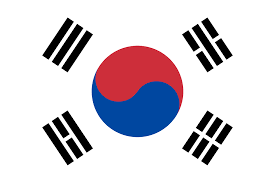
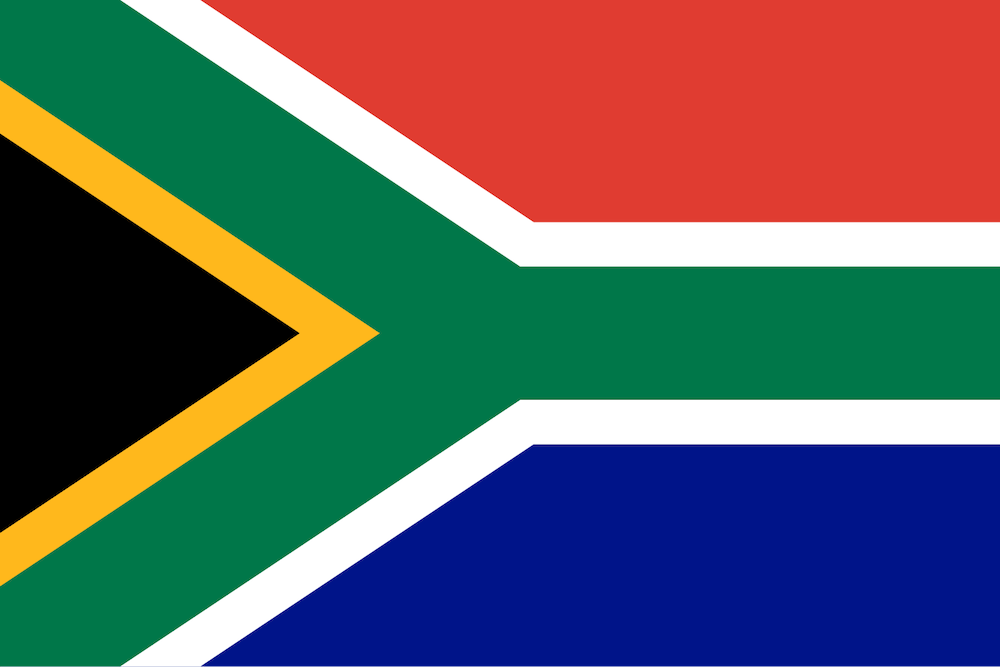
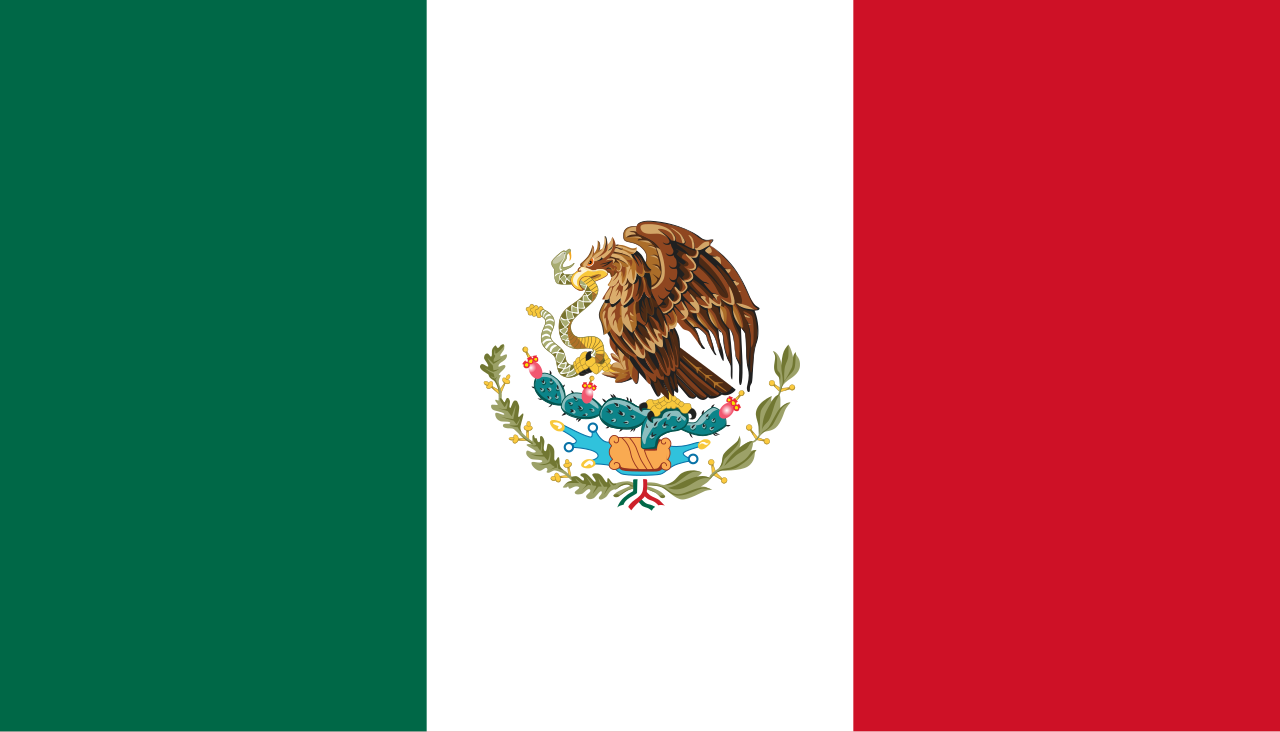
    ​Czechia are in Group A alongside Mexico, South Korea and South Africa.

    Czechia and South Korea have only faced off three times before, but this summer is the first time in a competitive setting. The record is split equally, with a win, a draw, and a loss for Czechia.

    ​The last match-up in June 2016 saw South Korea win 2-1 in Prague.

    ​The only ever fixture between South Africa and Czechia came in Group B of the FIFA Confederations Cup in 1997. A brace from Vladimir Smicer wasn’t enough to deny Bafana Bafana a late 2-2 draw courtesy of Helman Mkhalele.

    Mexico​ and Czechia faced off in 2000 in Hong Kong for the Lunar New Year Cup, with the Czechs winning the tournament by beating Mexico 2-1 in the final. It will be a tough occasion as the game will take place in front of a daunting atmosphere at the Azteca.

    South Korea vs Czechia – Guadalajara – Friday 12th June (03:00)

    Czechia vs South Africa – Atlanta – Thursday 18th June (17:00)

    Czechia vs Mexico – Mexico City – Thursday 25th June (02:00)

  • South Korea- 2026 World Cup Factfile

    South Korea- 2026 World Cup Factfile

    South Korea will compete in their 10th consecutive World Cup in North America, enjoying the most successful spell in their history, and they will hope to be right up there as one of the highest performing Asian nations in the tournament.

    World Cup History

    The Tigers of Asia have competed in eleven World Cups, once as joint hosts in 2002 alongside Japan, where they became the first team outside of Europe and the Americas to reach a World Cup semi final.

    South Korea have also been at every tournament since Mexico 1986, including the World Cup in the United States in 1994, so they will be hoping to enjoy a successful run at their third tournament in North America.

    Their highest finish at a World Cup was that 2002 World Cup held in South Korea and Japan where they finished fourth, but the Taegeuk Warriors have also reached the Round of 16 on two occasions.

    Before this run of ten consecutive World Cups, South Korea had only appeared at the 1954 tournament in Switzerland where they were unable to make it out of the group stages.

    Qualification and Recent Form

    South Korea are 25th in the FIFA rankings, having recently dropped three places thanks to their recent losses in the March international break.

    In qualification for this tournament, the Taegeuk Warriors topped their group, not seeing defeat in any of the ten matches, meaning they have not lost a competitive match since the Asian Cup semi-final in February 2024, where Jordan beat them 2-0.

    Since qualifying for the World Cup, the Tigers of Asia have competed in eight friendlies, winning four, drawing one and losing three, but their most recent two against the Ivory Coast, which was played in Milton Keynes, and Austria finished 4-0 and 1-0 respectively, with South Korea on the losing side in both.

    Yet, this does mean that since the 2022 Qatar World Cup, South Korea have only lost six matches in total with this record including friendlies, but with two of these coming three months before the start of the 2026 World Cup, they are going into it out of their best form.

    Manager – Myung-Bo Hong

    One of the most decorated Asian defenders of all time, Hong Myung-Bo is in his second spell as first team manager of South Korea, having also had a brief stint as the assistant manager.

    He played in four World Cups himself for South Korea, the first in 1990, the last the 2002 tournament in Korea and Japan, where he won the Bronze Ball, awarded to the player deemed third best at the entire tournament, becoming the first Asian player to win an individual award at a World Cup.

    Until 2025 the experienced defender was South Korea’s all time top appearance maker, earning 136 caps, but last year he was overtaken by Son Heung-Min with 142. 

    In terms of club career, the 57 year old made the most appearances for Pohang Steelers, where he played 110 games, before moving to Bellmare Hiratsuka and Kashiwa Reysol, although he returned to Steelers in 2002. After only one season he moved to LA Galaxy where he played 38 games. Across all of his clubs, Myung-Bo made 281 appearances, and found the net 21 times, a feat he managed additionally ten times for his country.

    This is his second World Cup in charge of the Taegeuk Warriors, having taken charge at the 2014 tournament, where South Korea ended winless, leading to Myung-Bo’s resignation. He rejoined the National Team in 2024 with the aim to lead South Korea to success at the 2026 World Cup.

    Key Player – Son Heung-Min

    Son Heung-Min has been one of Tottenham Hotspur’s most successful players over the past 10 years, joining Spurs in 2015, and only leaving last year to join Los Angeles FC in the MLS.

    He made over 300 appearances for Tottenham, scoring 127 goals, and was for a period one of the most dangerous attackers in the Premier League, forming a dangerous partnership with Harry Kane for a number of seasons, even winning the Golden Boot in the 21/22 season.

    When Kane left Spurs in 2023, Son as well as Tottenham struggled, and he has never really been the same, even since his move to the MLS. 

    However, as the United States are one of the host countries, the South Korean captain will be used to the climate, and has experience playing in a number of the stadiums in use at the World Cup.

    He is now 33 and there is a high chance this is his last World Cup for the Tigers of Asia, so he will want to make it even more memorable than the previous three that he has competed in. 

    In the 2022 World Cup Son failed to score, although he bagged three goals across the 2014 and 2018 tournaments – the captain will be desperate to get on the scoresheet in North America.

    Matches

    South Korea, who were drawn from Pot Two, are in Group A alongside one of the hosts with that being Mexico, and will compete in the second game of the entire 2026 World Cup, facing Czechia. South Africa are the other team in the group. 

    In terms of head to head, South Korea have won, drawn and lost against Czechia in their three meetings, the most recent a loss in a 2016 friendly, this being the two sides first competitive meeting.

    South Korea will be hoping to top the group, and there will be some expectations in doing so, but hosts Mexico are a huge obstacle standing in their way, with a home crowd roaring behind them.

    South Korea vs Czechia – Guadalajara – Friday 12th June (03:00)

    Mexico vs South Korea – Guadalajara – Friday 19th June (02:00)

    South Africa vs South Korea – Monterrey – Thursday 25th June (02:00) 

  • South Africa- 2026 World Cup Factfile

    South Africa- 2026 World Cup Factfile

    South Africa will play in their first World Cup since the 2010 tournament, which it hosted. Bafana Bafana will play in the opening match of the 2026 World Cup against co-hosts Mexico at the Estadio Azteca, a repeat of the opening match of the 2010 edition, the first that was held in Africa.

    World Cup History

    South Africa has played in three World Cups, with the 2026 edition being its first in 16 years.

    Their first came in 1998. In qualifying, Bafana Bafana beat Malawi in the first round 4-0 on aggregate. They were then placed into Group 3 alongside Congo, Zambia and the Democratic Republic of the Congo (who were remanded from Zaire halfway through qualifying).

    After topping the group with 13 points, they qualified for the tournament, in which they were placed into Group C alongside hosts France, who topped the group, Denmark and Saudi Arabia. 

    Despite a 1-1 draw against Denmark and a late equaliser in a 2-2 draw against Saudi Arabia, they exited the tournament in finishing 3rd, two points behind Denmark.

    The 2002 World Cup saw their best performances in the tournament to date, though once again they were unable to make it past the group stage, with Paraguay snatching second place on goals scored.

    In their most recent appearance, where they were hosts, Siphiwe Tshabalala gave them a world-renowned moment, scoring first in a 1-1 draw against Mexico in Soccer City, Johannesburg. 

    That being said, South Africa once again earned four points but were eliminated from the group stage, with a 2-1 defeat to France in their final group stage match in Bloemfontein not being enough to snatch a spot in the knockout rounds. 

    This meant that South Africa became the first World Cup host team to fail to advance past the group stage after placing behind Mexico on goal difference.

    Qualification and Recent Form

    South Africa, from the back of their qualification campaign, had high hopes going into the 2025 edition of the African Cup of Nations, but were unfortunate not to advance any further than the round of 16.

    A 79th-minute strike from Lyle Foster would give South Africa all three points against Angola, but a defeat against Egypt on Boxing Day in Agadir would mean they would have to avoid defeat, bettering or equalling the result of Angola’s match against group leaders Egypt, but with the Sable Antelope playing out a goalless draw against the 2010 Champions (who last won the competition in Angola), they would not have to worry.

    But, much like their first opponents, Mexico, their form recently has not been as good as they would have hoped for with their first World Cup in sixteen years on the horizon.

    In their last four matches, Bafana Bafana have only won once, beating Mario Marinica’s Zimbabwe in Marrakesh in their final group stage match.

    The most southern-based side geographically in the continent has only had two friendlies since the tournament, with both coming against an up-and-coming Panama side, yet with a 1-1 draw followed by a 2-1 defeat just four days later is not quite what Broos’ side would have been looking for.

    Manager – Hugo Broos

    Hugo Broos has been the manager of the South African national team since 2021. This is his second time managing a national team, with Broos managing Cameroon from February 2016 to December 2017, where he won the Africa Cup of Nations. 

    His managerial career started in his home country of Belgium with R.W.D. Molenbeek, before managing Belgium’s second most successful side, Club Brugge for seven seasons, winning the title twice in 1992 and 1996, and winning the Belgian Cup three times.

    He then managed 197 matches at Excelsior Mouscron between July 1997 and June 2002 before leaving to go to Anderlecht, where he led Belgium’s most successful side to the title in the 2003–04 season, though he was sacked for the first time in his career the following season. 

    After managing two clubs in Algeria, Broos was named manager of the Cameroon national team in a ‘shock appointment’, with his name not being on the Fecafoot’s shortlist. 

    Albeit the appointment paid off, with his side winning the 2017 Africa Cup of Nations, coming back from behind to beat Egypt 2-1 in Gabon, despite qualifying from the group stage in second and only winning once.

    Yet, Broos was dismissed just ten months into the job, with Hugo, with leaked documents showing that members of Fecafoot (the Cameroon Football  Federation) wanted him out, with the Belgian saying that “this is something that is not serious, it’s a soap opera … what happens now in Cameroon.”

    Key Player – Lyle Foster

    Lyle Foster has quickly grown into a key attacking player for both his club, Premier League side Burnley, and the South African national team. 

    The striker, who was first called up to his national team in 2018, has earned 28 caps, scoring on ten occasions, contributing to their success in World Cup and AFCON qualification.

    This was most evident in the most recent AFCON, where Foster earned two man of the match performances after scoring a decisive goal each in both their group stage wins against Angola and Zimbabwe, in which the latter he also registered an assist.

    As for his club career, his performances and returns at Burnley have been similar in both the Premier League and Championship, with Foster just two goals off his best season in a Clarets shirt, which came in the 2023/24 season, when Burnley failed to survive the drop on the first time of asking.

    Foster’s career started in South Africa, with regional giants Orlando Pirates before the promising South Africa youth international was brought by Monaco, therefore becoming the youngest Pirates player to move to a Top Five European league.

    Yet after a season with their academy side, he was sent on loan to Monaco’s feeder club Cercle Brugge in the Belgian Pro League, where he played 18 times for the ‘Green and Black’.

    In August of 2020, Foster joined Vitória de Guimarães for approximately £1.08 million, before being loaned out to Westerlo in Belgium on a loan-to-buy which was activated at the end of the season after scoring five goals and gaining four assists, helping them gain promotion to the top flight.

    The season after saw an even better return with eight goals and three assists in the Belgian Pro League, earning him a transfer to Burnley for an amount just shy of £10 million, where his speed makes him a major threat on the counterattack.

    Matches

    South Africa, who were drawn from Pot Three, are in Group A alongside Mexico, South Korea and European play-off winners Czechia. Two of their three matches will take place in Mexico, with the other taking place at the Mercedes-Benz Stadium in Atlanta, Georgia. 

    Their opening match will be against the same opponent, same manager on the same date, just sixteen years later.

    Mexico vs South Africa – Mexico City – Thursday 11th June (20:00)

    Czechia vs South Africa – Atlanta – Thursday 18th June (17:00)

    South Africa vs South Korea – Monterrey – Thursday 25th June (02:00)

  • Mexico- 2026 World Cup Factfile 

    Mexico- 2026 World Cup Factfile 

    Mexico, alongside Canada and the United States are joint-hosts of the 2026 FIFA World Cup, which means that they will become the only country to host three FIFA World Cups. This will be El Tri’s 18th World Cup, meaning they have qualified for the tournament on the most occasions out of sides that have yet to win it.

    World Cup History

    Excluding the upcoming tournament, Mexico have qualified for the World Cup on 19 occasions, but it has participated in only 17. 

    This is because the El Tri withdrew from the 1938 World Cup due to the tournament taking place in Europe, as well as being banned from the 1990 World Cup in Italy due to the Cachirules scandal, where the Mexican Football Association knowingly played at least four overage players at the U-20 CONCACAF Tournament.

    El Tri’s consistency on the international stage has made them the most reliable qualifiers from the CONCACAF region, regularly topping or finishing near the top of the final qualifying round.

    Despite their constant success in qualification, the furthest they have reached in FIFA’s centrepiece is the quarter-finals, with both occasions being the case in World Cups that Mexico hosted (1970 and 1986).

    Since the 1994 World Cup onwards, El Tri have failed to make it past the round-of-16, with the most recent tournament in Qatar being the first time that they had failed to make it that far since 1978. 

    In the Middle East, Mexico, who were managed by Gerardo ‘Tata’ Martino, opened their campaign with a goalless draw against Poland, with Guillermo Ochoa saving a penalty from Robert Lewandowski. 

    Yet, a win against Saudi Arabia was not enough on the final matchday, with the defeat against Argentina in their second match enough for El Tri to miss out on progression only on goal difference.

    The closest that El Tri has been to getting further into the knockout stages came in 2006 and 2014, where, in the latter, a soft foul on Arjen Robben in the box allowed for Klaas-Jan Huntelaar to convert a penalty past Mexican legend Ochoa deep in added time, with then Mexico manager Miguel Herrera calling for referee Pedro Proença to be sent home from the tournament.

    Recent Form

    Mexico are currently ranked 16th in the FIFA World Rankings, down one place since the last World Cup in Qatar.

    Despite this, Mexico won the CONCACAF Gold Cup last summer. During the group stage, Aguirre’s side beat both Suriname and the Dominican Republic, and played a goalless draw against group runners-up in Costa Rica.

    In the knockout stages, Mexico beat Saudi Arabia 2-0 thanks to two goals at opposite ends of the second half, before beating Honduras 1-0 in the semi-finals through a Raúl Jiménez right footed strike just inside the box.

    In the final, which was played at NRG Stadium in Houston, the United States took an early lead through Crystal Palace’s Chris Richards, scoring a header which hit the underside of the bar and crossed the line.

    Albeit, Jiménez would score at Matt Freese’s near post with a powerful strike half way through the first half, with the winner coming in the 76th minute from a set-piece, with a whipped in free kick, being flicked on from Johan Vásquez to West Ham’s Edson Álvarez from close range to win their 10th Gold Cup.

    Since then, their form has been quite poor, evident through a six game winless streak. 

    That being said, in their last three matches, Aguirre’s side have won all of their matches, keeping clean sheets across four of their last five.

    Manager – Javier Aguirre

    Javier Aguirre is on his third spell as Mexico manager. 

    Born in Mexico City, the 67-year-old earned 59 appearances for the national team, with the midfielder scoring on 13 occasions.  

    In terms of management, Aguirre replaced Enrique Meza after one win in twelve matches for the national team, where Aguirre guided El Tri to the 2002 World Cup after finishing behind Costa Rica after qualifying. 

    During their qualification campaign and the finals of the tournament, Aguirre guided his national team to the final of the 2001 Copa America, albeit they were unable to take home the Centenario trophy, losing 1-0 in the final to hosts Colombia. 

    In the 2002 World Cup, Mexico topped the group which included Italy, but was defeated by the United States in the round-of-16. This was the same case in the 2010 World Cup in which Aguirre was re-appointed for, though this time it was Argentina who beat his side 3-1 in the round-of-16.

    Since his last spell managing El Tri, El Vasco has also managed Japan for the 2015 AFC Asian Cup, Egypt for the 2019 Africa Cup of Nations where they were eliminated in the round-of-16, and had spells in Spain managing Leganés and Mallorca, where he reached the final of the Copa del Rey with the latter.

    Key Player – Raúl Jiménez

    Jiménez will be a familiar name to all Premier League fans. The Mexican made 166 appearances for Wolves in all competitions during his time at the club from 2018 to 2023, where he scored 57 goals, with the striker playing 70 matches at the time of writing for Marco Silva’s Fulham.

    The predominantly right-footed striker started his career within the youth development of Mexican giants Club América, where he made his debut in October of 2011. 

    After three seasons at the club, where he won the 2013 Clausura, he was signed by Atlético Madrid, though joined Benfica just a season later. Here, Jiménez made 120 appearances for As Águias, scoring on 31 occasions, helping his side win two Liga Portugal titles.

    From here, Jiménez was loaned out to Wolves ahead of their first season back in the Premier League since 2012 on a season-long loan for a fee of £2.6 million, with a buyout clause of £33 million. This deal was made permanent after helping the newly-promoted side finish 7th in the league, scoring thirteen goals in the league, and seventeen across all competitions. 

    He would go on to play another four seasons at the club after his loan-move was made permanent, scoring 57 goals in 166 matches, leaving Molineux as the player with the most Premier League goals for Wolves. 

    He was bought by Fulham for Fulham for £5.5m in July of 2023, where he has been a regular starter.

    As for the national team, Jiménez was a part of the under-23 squad that won the gold medal at the 2012 London Olympics, and has represented Mexico in the last three FIFA World Cups. 

    Jiménez has won two CONCACAF Gold Cups in 2019 and 2025, and is currently El tri’s third all-time top goalscorer with 44 goals.

    Matches

    El Tri will host the first of 104 World Cup matches when they take on South Africa, in a rematch of the opening match of the 2010 South Africa World Cup where the score was level between both sides. Mexico will be expected to top the group, though South Korea will pose the biggest threat.

    Mexico vs South Africa – Mexico City – Thursday 11th June (20:00)

    Mexico vs South Korea – Guadalajara – Friday 19th June (02:00)

    Czechia vs Mexico – Mexico City – Thursday 25th June (02:00)

  • Every Western region Stadium Hosting the 2026 World Cup

    Every Western region Stadium Hosting the 2026 World Cup

    For the first time in the competition’s history, the 2026 FIFA World Cup will be hosted by three nations : Canada, the United States, and Mexico. With 16 stadiums hosting the world’s most prestigious tournament in 16 different cities, below are the cities and stadiums that make up the Western region.

    BC Place – Vancouver, British Columbia, Canada

    BC Place will host two of Canada’s group stage matches, hosting seven matches in the tournament in total, with the opening match for Jesse Marsch’s side taking place in Toronto.

    BC Place is located in the heart of Vancouver, and is the third biggest stadium in the country. This is after the Commonwealth Stadium in Edmonton and the Olympic Stadium in Montreal.

    Despite the size of the stadium, which boasts 54,500 seats, Vancouver was not initially planned to be a part of the bid to host the World Cup. Vancouver was only able to re-enter the process after Montreal withdrew, following the Government of Quebec’s decision in mid-2021 to pull financial support for Olympic Stadium, which requires significant renovations.

    The stadium is home to the Canadian Football side BC Lions, and the Vancouver Whitecaps, who joined the MLS in 2011, becoming the second Canadian side to join. Despite the conditions of the stadium, there are ongoing issues regarding the Whitecaps and BC Place.

    The current Canadian Cup Champions obtain a lease for the stadium, though this expires in December 2025. Despite current negotiations taking place, MLS commissioner Don Garber has argued that the city needs to invest in a new stadium for the club to remain viable in Vancouver, due to the club currently gaining very little commercial revenue from the stadium. Moreover, the Whitecaps had to play a home match in Portland this season, due to their stadium having a scheduling conflict.

    Lumen Field – Seattle, Washington, United States

    Seattle will host a total of six matches at the 2026 World Cup, with four of those taking place in the group stages. The matches will take place at Lumen Field, which is the home of the MLS’ Seattle Sounders and NFL’s Seattle Seahawks, albeit the stadium will be named after the city throughout the tournament due to FIFA’s licensing laws and agreements.

    The stadium, which is the most northern American host city in the tournament, will be expanded to 72,000 seats for the tournament. Lumen Field played host to six matches in the revamped FIFA World Cup last summer, with all matches taking place in the group stages. This included Seattle Sounders playing three times during the tournament, in matches against Botafogo, Atlético Madrid, and Paris Saint‑Germain.

    Lumen Field, when constructed, was known as Seahawks Stadium between 2002 and 2004, with the stadium changing names to Qwest Field until 2011 and then CenturyLink Field until 2020.

    The stadium started construction in 2000, following the demolition of the Kingdome in March of the same year. The decision to build the stadium was due to the outdated conditions and urgent repair needed at the Kingdome, as well as to accommodate the new MLS franchise in the Sounders.

    Levi’s Stadium – San Francisco Bay Area, California, United States

    California will be home to two host cities during the World Cup, with the first being in Santa Clara, which is part of the San Francisco Bay Area Stadium. The stadium in question that will host six matches in the tournament (including one knockout match) is Levi’s Stadium, which will be known as San Francisco Bay Area Stadium throughout the tournament due to FIFA’s rules on sponsorship and licensing agreements. 

    Levi’s Stadium has a capacity of 68,500 seats, although this can be expanded to 75,000 for events such as the World Cup and Super Bowls, with the stadium hosting the NFL’s final in 2016 and soon to be in 2026.

    The stadium broke ground in April of 2012, completing construction in July of 2014.  This was to replace Candlestick Park, the former home of the San Francisco 49ers and MLB’s San Francisco Giants, with the stadium getting demolished in late 2014.

    Despite the stadium being the fifth newest stadium in the NFL, there are a few notable issues that fans have stated. The primary example of such is the exposure from the sun, primarily on the east side of the stadium, where some seats reach over 38°C.

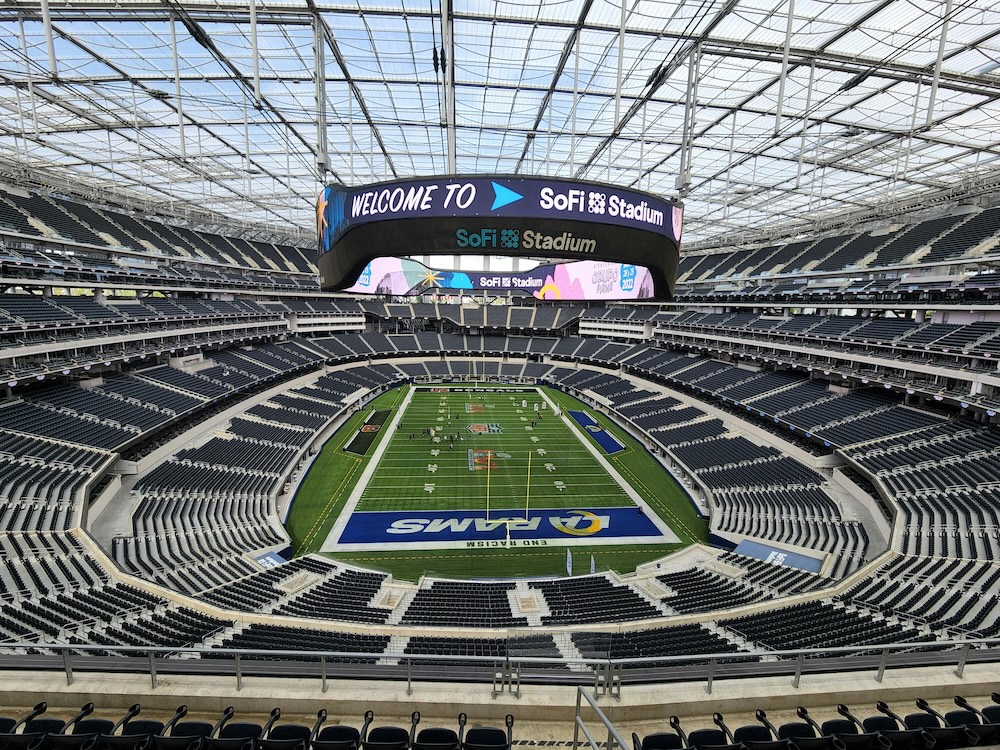
    SoFi Stadium – Los Angeles, California, United States

    Los Angeles is the third most populous city that hosts matches during the 2026 World Cup, placing behind Mexico City and New York City, with the latter hosting the World Cup Final.

    The city will host eight matches during the tournament, including three knockout matches. These matches will take place at the state-of-the-art SoFi Stadium, which neighbors the Kia Forum, the former home of the LA Lakers and LA Kings, and Intuit Dome, the current home of the LA Clippers, which is the newest stadium in the NBA.

    SoFi Stadium is home to two NFL teams, the Los Angeles Rams and Los Angeles Chargers. The stadium started construction in 2016 and was completed in 2020, privately financed by Stan Kroenke, the owner of Arsenal. It has a capacity of 70,240 but will be expanded to 100,240 for the World Cup.

    The stadium cost $5.5 billion to build, making it the most expensive stadium in the world. Such amenities the stadium consists of a retractable roof, the world’s first dual-sided 4K Infinity Screen, produced by Samsung, as well as engineering that can withstand earthquakes.

    Such a stadium serves as a pinnacle of American sporting infrastructure; therefore, the stadium has already had a plethora of stadiums, and was the favourite to host the World Cup Final. Such events included Super Bowl LVI, which was won by Kroenke’s Rams, the upcoming Super Bowl in 2027, Wrestlemania, as well as the upcoming Olympics and Paralympic Games in 2028. 

    This has resulted in the stadium earning several accolades, such as “Stadium of the Year” and the 2024 Architecture Award.

  • Every Central region Stadium Hosting the 2026 World Cup

    Every Central region Stadium Hosting the 2026 World Cup

    For the first time in the competition’s history, the 2026 FIFA World Cup will be hosted by three nations : Canada, the United States, and Mexico. 

    With 16 stadiums hosting the world’s most prestigious tournament across 16 different cities, below are the cities and stadiums that make up the Central region.

    AT&T Stadium – Dallas, Texas, United States

    Dallas is one of two host cities in the Lone Star State, hosting more World Cup matches than any other city, including a semi-final. 

    The city, which was the favourite to gain the hosting rights to the final, narrowly missed out to New York’s MetLife Stadium, with FIFA awarding AT&T Stadium the most matches in the tournament as a consolation.

    The stadium is home to the Dallas Cowboys, as well as other competition finals in American Football. Despite being based in Arlington, which is located 23 miles east of Dallas, the stadium will be known as Dallas Stadium due to FIFA’s regulations on sponsorships, with the choice in naming being chosen due to Arlington being part of the Dallas–Fort Worth metroplex, which is the fourth most populous conurbation after New York City, Los Angeles and Chicago, with the latter being the only city out of that list to not have any involvement in the tournament. ​

    The Dallas Stadium is the largest stadium in the tournament, currently seating 80,000 supporters, which is expandable to 105,000, although the bidding book for the World Cup lists the stadium capacity to be 93,000.  This makes the stadium the third largest in the NFL, behind both MetLife Stadium and the Green Bay Packers’ stadium, Lambeau Field.

    The stadium boasts a closed roof and an enormous centre-hung video board, which is approximately 49 meters in length. It hangs so low that several punts in the NFL have actually hit the screen, meaning that the play has to be replayed.

    This is where England will play their opening match of the tournament, coming up against Zlatko Dalić’s Croatia, who have reached at least the semi-finals in the last two World Cups.

    Estadio Guadalajara – Guadalajara, Jalisco, Mexico

    Estadio Guadalajara, known as Estadio Akron for sponsorship purposes, has been the home of Liga MX side C.D. Guadalajara since 2010, when the club moved from the Estadio Jalisco.

    The stadium has a capacity of 49,000, making it the second smallest stadium in the tournament after Toronto’s BMO Field.

    Estadio Guadalajara is most recognisable for its sweeping exterior, designed to look like it rises naturally from the ground. The stadium’s arched concrete shell is covered with grass, giving it the appearance of a grassy hill rather than a traditional stadium. 

    It also has a roof that appears as if it is floating above the stadium, being held above the stadium with 16 pillars.

    Despite the stadium being built fifteen years ago, El Tri have played three matches here, though they have only won on one occasion. This came against the United States on the 15th of October in 2024. Both matches in which Mexico failed to win here came against the same opposition: Ecuador.

    The home of C.D. Guadalajara held two matches at the World Cup inter-confederation play-offs, where Jamaica would earn their spot in the final after beating New Caledonia, but would eventually lose 1-0 to the DR Congo in added time, who will compete in their first tournament since the 1974 edition in West Germany.

    Estadio Azteca – Mexico City, Mexico

    Mexico City is the only capital city between the three host nations that will host matches in the tournament, with Washington D.C. and Ottawa missing out. That being said, the District of Columbia played host to the draw for the tournament last December at the Kennedy Centre.

    Mexico City is the most populous city across all three host nations to host matches in the tournament, with the city being the sixth most populous city in the world.

    The stadium that will host five matches in the world’s most-watched tournament is the Estadio Azteca, which will have a capacity expanded to 90,000 spectators, sitting at an elevation of 2,200 meters above sea level. The stadium is home to Liga MX side Club América, as well as the Mexican national team.

    It will become the first stadium in World Cup history to host matches in three different World Cups, albeit, unlike the previous two editions, it will not host any matches past the Round of 16.

    NRG Stadium – Houston, Texas, United States

    The city of Houston, which is immortalised as one of the first words spoken on the Moon, is no stranger to playing a part in historic moments. Now, the city is preparing to host seven matches in the 2026 FIFA World Cup.

    These matches will take place at NRG Stadium, the home of the NFL’s Houston Texans, as well as the Texas Bowl and the Houston Livestock Show and Rodeo. The stadium (formerly known as Reliant Stadium) will be called the Houston Stadium throughout the tournament, and boasts 72,220 seats, though it can be expanded to roughly 80,000 seats for special occasions. It opened in 2002, built specifically to bring an NFL franchise back to the city following the departures of the Oilers.

    The home of the Texans will host seven matches in the tournament, which, alongside the host city of Dallas, means that the state of Texas will host more games in the tournament than any other state. 

    Alongside the city being the location of NASA’s Johnson Space Center, the “Energy Capital of the World” is also home to Texas Medical Center, the largest medical centre in the world, which includes 21 hospitals as well as the home of 10 oil refineries which produce over 2.5 million barrels of crude oil every day.

    Estadio BBVA – Monterrey, Nuevo León, Mexico

    Estadio Monterrey is the home of C.F. Monterrey is located in Guadalupe, in Greater Monterrey, in the state of Nuevo León. It has a capacity of 53,529 and will host four matches in the World Cup, including a knockout match.

    The stadium, known as Estadio BBVA due to sponsorship, started construction in 2011 and was completed four years later in 2015, with the first match in the stadium taking place in August of that year, with Monterrey beating Benfica 3-0 in a friendly.

    Estadio Monterrey was built to replace the Estadio Tecnológico, which was the home of Monterrey from 1952 until 2015, when it was partially demolished soon after to make way for the Estadio Borregos, the home of a Mexican-based American Football team called Fundidores de Monterrey.

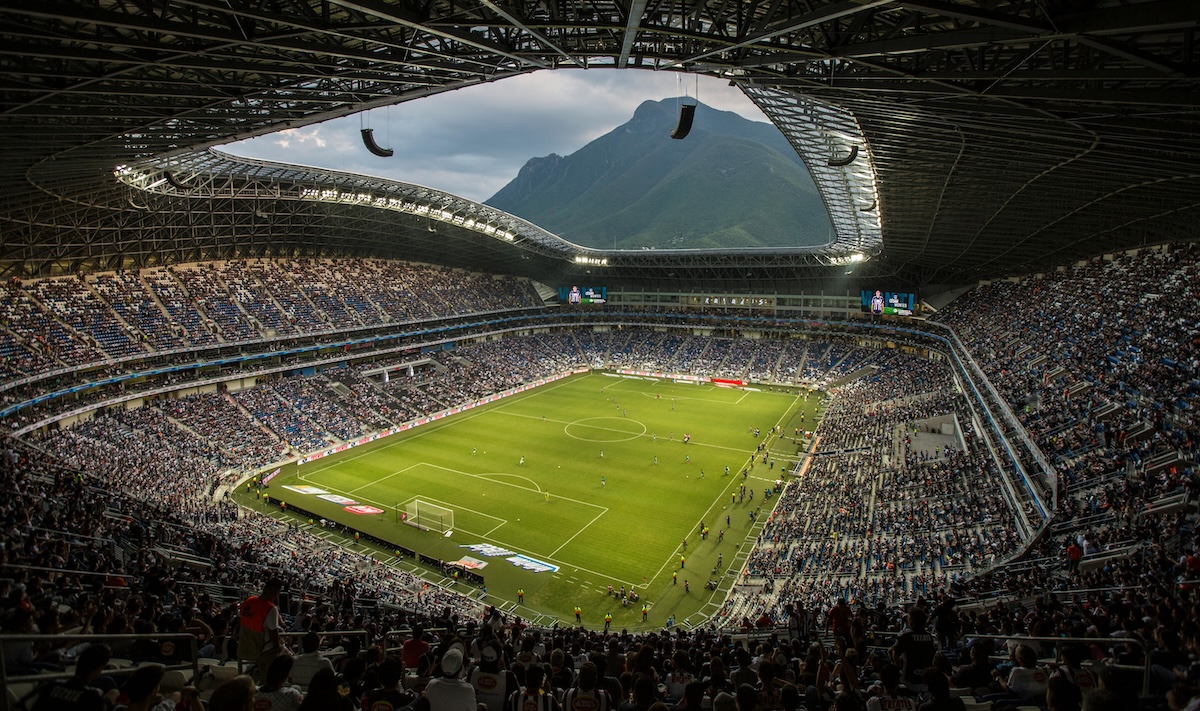
    Both the Estadio Tecnológico and Estadio BBVA overlook the Cerro de la Silla mountain range, giving Estadio Monterrey, most probably, the best skyline out of any other host city. The stadium played host to two matches in the World Cup inter-confederation play-offs, which saw Iraq book their ticket stateside.

    Arrowhead Stadium – Kansas City, Missouri, United States

    Kansas City is the largest city in the state of Missouri, although the city is split across both the state of Missouri and Kansas due to its situation at the confluence of the Missouri River and the Kansas River. 

    It is the sixth-most populous city in the Midwest and the 38th most populous city in the United States. This makes Kansas City the least populous of the 16 selected cities.

    Despite this, Arrowhead Stadium, which is situated in the state of Missouri, will host six matches for the tournament. The stadium, which will be known as Kansas City Stadium throughout the tournament, is home to the Kansas City Chiefs, one of the most successful NFL sides in recent history, winning two out of the last three Super Bowls.

    Arrowhead was constructed 57 years ago in July 1968, with construction getting completed four years later. Since then, Arrowhead has been renovated on three occasions, with the latest occurrence being back in 2010. That being said, the Mayor of Kansas City, Quinton Lucas, has pledged $50 million for renovations for the stadium to be ready for the World Cup.

    However, in December of 2025, the owner of the Chiefs, Clark Hunt, announced the team’s decision to move to the opposite side of the river, relocating to Wyandotte County and leaving Arrowhead Stadium behind. In doing so, the Chiefs would build a state-of-the-art stadium, expected to cost around $3 billion.

  • Every Eastern region Stadium Hosting the 2026 World Cup

    Every Eastern region Stadium Hosting the 2026 World Cup

    For the first time in the competition’s history, the 2026 FIFA World Cup will be hosted by three nations : Canada, the United States, and Mexico. With 16 stadiums hosting the world’s most prestigious tournament across 16 different cities, below are the cities and stadiums that make up the Eastern region.

    BMO Field – Toronto, Ontario, Canada

    Toronto is the most populous city in Canada, with a population estimated to be around three and a half million. 

    Albeit, the metropolitan population of the city, named the Greater Toronto Area (which includes various regional municipalities such as York and Durham), is around 7.16 million. This makes Toronto’s metropolitan population the largest in Canada by just over 2.5 million, and the seventh largest in North America.

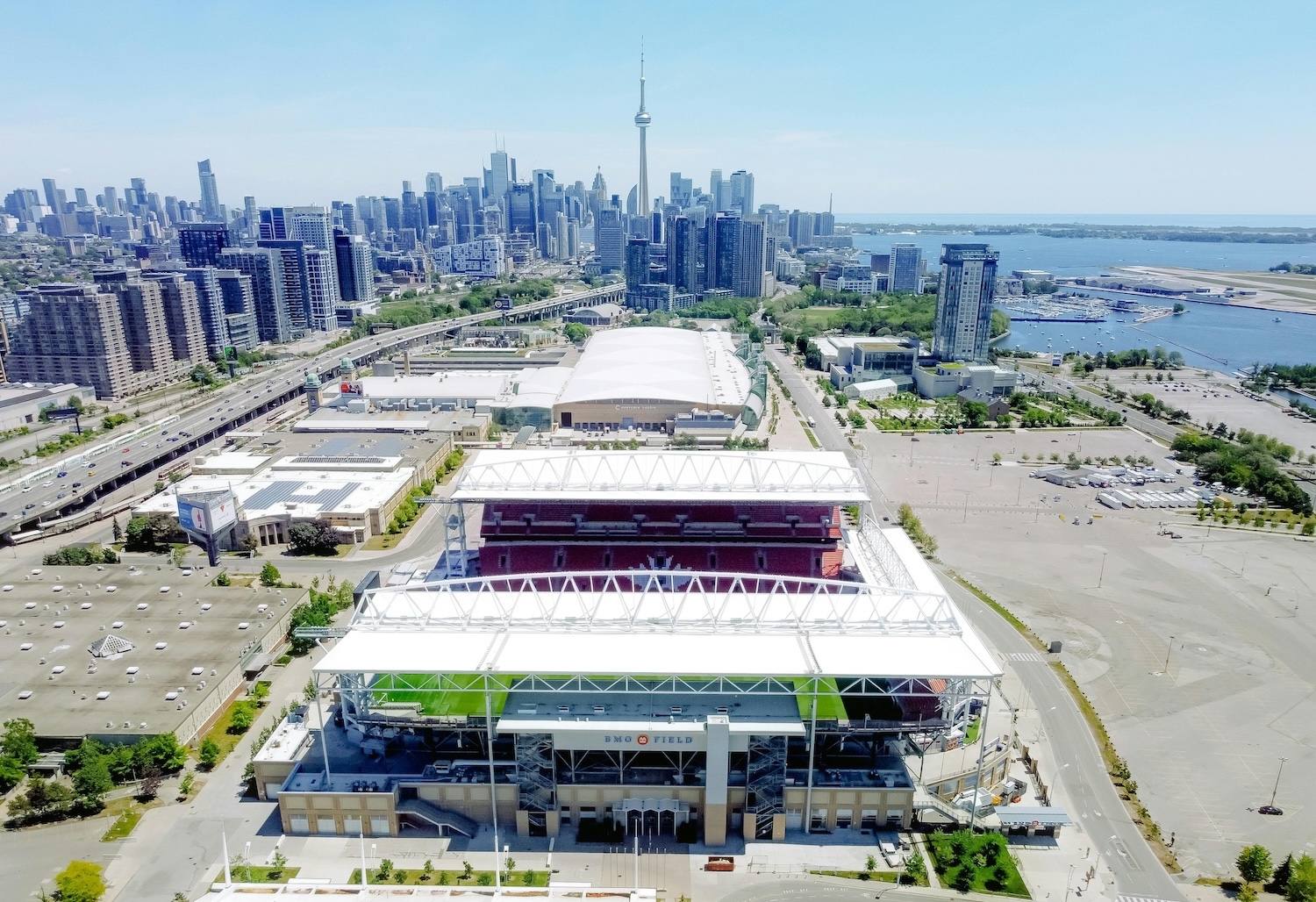
    Despite this, Toronto has the smallest stadium out of any other city in the tournament, with BMO Field having a capacity of 28,180. 

    That being said, the stadium, which will be named Toronto Stadium during the tournament due to FIFA’s sponsorship rules, will be expanded to 46,000, with recent renovations concluding last month.

    BMO Field is home to two sides: MLS side Toronto FC and the Toronto Argonauts, with the latter being a Canadian Football League franchise. 

    The stadium, commissioned by the Province of Ontario alongside Maple Leaf Sports & Entertainment, was built specifically for the 2007 FIFA U-20 World Cup and Toronto FC.

    Toronto FC, nicknamed the Reds are one of the most successful teams in MLS history, winning the MLS Cup and Supporters’ Shield in 2017, as well as winning the Eastern Conference on three occasions. 

    They play in the MLS alongside two other Canadian-based sides, Vancouver Whitecaps and CF Montreal, with the club playing in red (hence their nickname) as a nod to Canada’s national colour, as the club was the first to represent “The Great White North” in the MLS. 

    The club is owned by Maple Leaf Sports & Entertainment, much like the Argonauts, NBA side Toronto Raptors, and most notably, the NHL’s Toronto Maple Leafs, which is arguably the largest ice hockey side in the world.

    As for the stadium, it has hosted two FIFA tournaments prior, with the previously mentioned 2007 FIFA U-20 World Cup and FIFA U-20 Women’s World Cup, though it did not host any matches during the 2015 Women’s World Cup, which was hosted solely in Canada, with the city already focused on hosting the 2015 Pan American Games, where Canada had their best performance ever in the Games, finishing 2nd overall with 217 medals in total.

    Hard Rock Stadium – Miami, Florida, United States

    For the second time, the ‘Sunshine State’ will host matches in a FIFA Men’s World Cup. This comes after the Citrus Bowl (now Camping World Stadium) in Orlando played host to five matches, in which three involved the Netherlands.

    Alas, Hard Rock Stadium, which will be named Miami Stadium throughout the tournament, in Miami, will soon be host to seven matches in the world’s most-watched tournament, including the third-place play-off.

    Hard Rock Stadium was host to eight matches in the revamped and expanded FIFA Club World Cup this past summer. This included six group stage matches, including Real Madrid’s 1-1 draw to Saudi Pro League side Al Hilal, and two matches in the round of 16.

    The stadium is home to the Miami Dolphins, who play in the American Football Conference of the NFL. Despite missing out on the playoffs last season, the Dolphins have won the Super Bowl on two occasions, with the Southeastern-based side achieving the only perfect season in NFL history in 1972.

    As for the stadium, it and its surroundings play host to the Itaú Miami Open, the racing circuit of Formula One’s Miami Grand Prix, and host of the Miami Open and one of the oldest American Football bowl games in the United States, the Orange Bowl.

    The stadium broke ground on the 1st of December in 1985, and opened around 18 months later. Since its opening 38 years ago, the stadium was renovated in 2015 after the baseball side, the Miami Marlins, left for their own stadium. This renovation included adding a roof, adding larger scoreboards, and changing the seats from bright orange to aqua blue. In doing so, the upgrades reduced the capacity from 75,000 to 65,000 seats.

    Mercedes-Benz Stadium –  Atlanta, Georgia, United States

    The city of Atlanta is home to the world’s busiest airport, Hartsfield–Jackson Atlanta International Airport, which handled 108 million passengers in 2024. The city, therefore, will be widely prepared when they are expected to welcome an estimated 300,000 visitors to the capital of the Peach State.

    Atlanta has had a history of holding sports events in the past decades. This includes the 1996 Summer Olympics in which over 10,000 athletes competed, where Great Britain earned fifteen medals in total.

    Moreover, the city has played host to many Super Bowls, including in 2019, as well as the 2025 College Football Playoff National Championship.

    Atlanta, like others on this list, played host to matches in the FIFA Club World Cup, which included the quarter final between Paris Saint-Germain and Bayern Munich, with Les Parisiens winning 2-0 on their route to the final.

    The stadium in question, which will hold eight matches in the tournament, including a semi-final, is the Mercedes-Benz Stadium, which replaced the Georgia Dome in 2017; the latter was only built in 1992.

    The futuristic Mercedes-Benz Stadium is in the heart of the city, boasting a retractable roof formed of eight translucent petals that takes roughly eight minutes to open or close. 

    The stadium serves as the home to both the MLS’s Atlanta United, which has seen a great start to life after their first match in 2017, three years after their establishment, and the NFL side, the Atlanta Falcons.

    The stadium helped pave the way for football in Atlanta, as the stadium served as a major catalyst to Arthur Blank’s bid for an MLS expansion franchise.

    Lincoln Financial Field – Philadelphia, Pennsylvania, United States

    Few cities blend historical significance and modern sporting ambition quite like Philadelphia, making it a fitting stage for the upcoming tournament, which at the time of writing, is less than two months away.

    The Philadelphia metropolitan area, which includes areas such as Delaware Valley and Camden, is the 11th-largest metropolitan area in North America.

    As is the case with all previous cities mentioned, Philadelphia, as well as the state of Pennsylvania, has never hosted a match in the FIFA Men’s World Cup. 

    That being said, Philadelphia was a host city in the FIFA Women’s World Cup in 2003, with four matches being played at Lincoln Financial Field, the home of former Super Bowl champions, the Philadelphia Eagles. 

    Lincoln Financial Field also played host to three matches during the 2016 Copa América Centenario, including a 1-0 win for the United States over Paraguay, as well as Chile’s 4-2 win over Panama, with Chile retaining their crown, beating Argentina on penalties in the final for the second consecutive tournament.

    Following its role in the 2003 FIFA Women’s World Cup, Lincoln Financial Field will once again host matches at the 2026 FIFA World Cup. The stadium, which is set to be known as Philadelphia Stadium during the tournament, will stage six matches, with five in the group stage and one in the round-of-16.

    In addition, the round-of-16 match, which is held on the 4th of July, coincides with the 250th anniversary of the signing of the Declaration of Independence in Philadelphia, which was signed just three miles away from the site of the stadium.

    Gillette Stadium – Boston, Massachusetts, United States

    Boston is a city of firsts, with the first subway system and the first public school, although this will not be the first time that the city has hosted matches in the World Cup before, back in 1994 at Foxboro Stadium. This included the quarter-final between Spain and Italy. Since then, Foxboro Stadium was demolished back in 2002, making way for Gillette Stadium, which will host seven matches, including one quarter-final.

    The stadium is home to the most successful NFL team in terms of Super Bowls, the New England Patriots. The stadium is also the home to MLS side New England Revolution, which is now sponsored by the stadium sponsor, Gillette.  

    The stadium is located in Foxborough, which is situated 22 miles away from the centre of Boston. It has a capacity just shy of 65,000, with the stadium brandishing a 22-story “lighthouse”, which is host to an observation deck with a 360-degree view.

    Much like the case with Philadelphia, Gillette Stadium played host to three matches during the 2016 Copa América Centenario. 

    This included Peru’s shock 1-0 win over five-time world champions Brazil, who were coming off the back of a disappointing World Cup campaign on home soil, and Chile’s 2-1 win over Bolivia, with ‘La Roja’ winning courtesy of a 100th-minute penalty that was converted by Arturo Vidal.

    The stadium will host seven matches during the FIFA World Cup, including a match in the quarter-finals.

    MetLife Stadium – New York/New Jersey, United States

    MetLife Stadium will host eight matches in the 2026 FIFA World Cup, including the World Cup Final.

    The stadium, which throughout the tournament will be known as “New York/New Jersey Stadium” in accordance with FIFA’s policy on corporate-sponsored names, has a history in terms of hosting significant football matches. 

    Just last Summer, the stadium hosted nine matches in the FIFA Club World Cup, including both semi-finals and the final.

    The stadium hosted two matches in the 2011 CONCACAF Gold Cup, both of which were quarter-finals. This was the case just four years later in the 2015 CONCACAF Gold Cup, albeit the stadium was host to the Copa América Centenario final in 2016, when Chile beat Argentina on penalties for the second consecutive final to retain their crown. 

    On top of this, three matches of the 2024 Copa América took place here, including the semi-final between world champions Argentina and high-flying Jesse Marsch’s Canada.

    The stadium, which is based in East Rutherford, New Jersey, is home to two NFL teams, the New York Jets and New York Giants, with the latter being the last team to win a Super Bowl back in February 2012. 

    Despite its geographical location, it is named predominantly after New York City due to the fact that it serves the broader New York metropolitan area, as well as the fact that “New York” carries greater brand recognition in terms of marketing according to football’s governing body.

    Despite being the third largest stadium in terms of the tournament after the Azteca Stadium in Mexico City and AT&T Stadium in Dallas/Arlington, Texas, MetLife Stadium was selected as the host of the final due to the infrastructure of New York City, which is situated just 10 miles away, and is the largest media market in the US.